
Standard Operating Procedure
Operations, Customer Service Safety Coordinating
Operations, Customer Service · All Nellis Auction Locations
| Document ID | SOP_Operations_Safety Coordinating_5.20.2026_V1 |
| Version | 1.0 |
| Effective Date | 05/20/2026 |
| Process Owner | Daniel Piccirillo, General Manager |
| Department | Operations, Customer Service |
| Facility | All Nellis Auction Locations |
Purpose
To establish a consistent and safe process for traffic coordination and customer guidance during order pickups at any Nellis Auction warehouse location. This SOP defines the role and responsibilities of the Safety Coordinator as the first point of contact for all arriving customers, ensuring they are properly directed from entry to parking in a controlled and organized manner.
This process exists to minimize safety risks within the parking lot by actively managing vehicle flow, preventing accidents, and protecting both customers and employees from potential harm. By maintaining clear direction and oversight, the Safety Coordinator reduces the likelihood of collisions, congestion, and confusion during high-volume.
Scope & Audience
Scope
This SOP applies to all Nellis Auction warehouse locations that facilitate customer order pickups. It covers all traffic coordination and parking lot management activities from the moment a customer enters the property until they depart the facility.
While physical layouts, parking lot sizes, and traffic patterns may vary by location, this SOP establishes a standardized approach to managing vehicle flow, customer direction, and safety coordination. All sites are expected to adapt these guidelines to their specific layout while maintaining the core principles of safety, control, and efficiency outlined in this document.
This SOP applies during all operational hours in which customer pickups are conducted.
Audience
This SOP is intended for all employees involved in customer pickup operations, including but not limited to:
- Safety Coordinators
- Area Managers / Operations Managers
- Lot Attendants & Load Out Employees
It is also relevant for site leadership responsible for enforcing safety standards and ensuring compliance with operational procedures.
Roles & Responsibilities
| Role | Responsibility | Description |
|---|---|---|
| Safety Coordinator | Serve as the first point of contact for all arriving customers entering the lot | Direct and control incoming traffic to ensure safe and orderly vehicle flow Guide customers to the appropriate parking location for order pickup Maintain visibility and awareness of all vehicle and pedestrian movement in the lot Proactively prevent unsafe conditions, congestion, or confusion Communicate clearly and professionally with customers at all times Escalate any safety concerns or incidents to site leadership immediately |
| Area Manager | Ensure the SOP is consistently followed | Monitor traffic flow and adjust staffing or processes as needed Conduct regular safety audits of the parking lot and traffic flow Address and resolve any recurring safety or operational issues |
| Lot Attendants & Load Out Employees | Help maintain clear driving lanes, signage visibility, and safe pedestrian pathways | Support customers as needed while reinforcing direction provided by the Safety Coordinator Report hazards, near misses, or unsafe behavior immediately |
Definitions & Key Terms
| Term | Definition |
|---|---|
| Traffic Flow | The controlled movement of vehicles entering, navigating, and exiting the warehouse parking lot. Effective traffic flow prevents congestion, minimizes risk, and ensures continuous movement without unsafe stoppages. |
| Lot Capacity | The maximum number of vehicles that can safely occupy the parking and staging areas at any given time without creating congestion, safety risks, or blocked access points. |
| Vehicle Staging | The temporary positioning of customer vehicles in designated holding or queue areas before being directed to a final pickup parking space. |
| Line of Sight | The Safety Coordinator’s unobstructed visual range of incoming vehicles, pedestrians, and active loading zones. Maintaining line of sight is critical for preventing collisions and ensuring safe direction of traffic. |
| Near Miss | An unplanned event where a collision or injury was narrowly avoided. Near misses must be reported as they indicate potential system failures in traffic control. |
Required Supplies & PPE
| Equipment / Supply | Supplier / Item Number | Photo / Reference |
|---|---|---|
| Hi-Visibility Vest | Sandy | 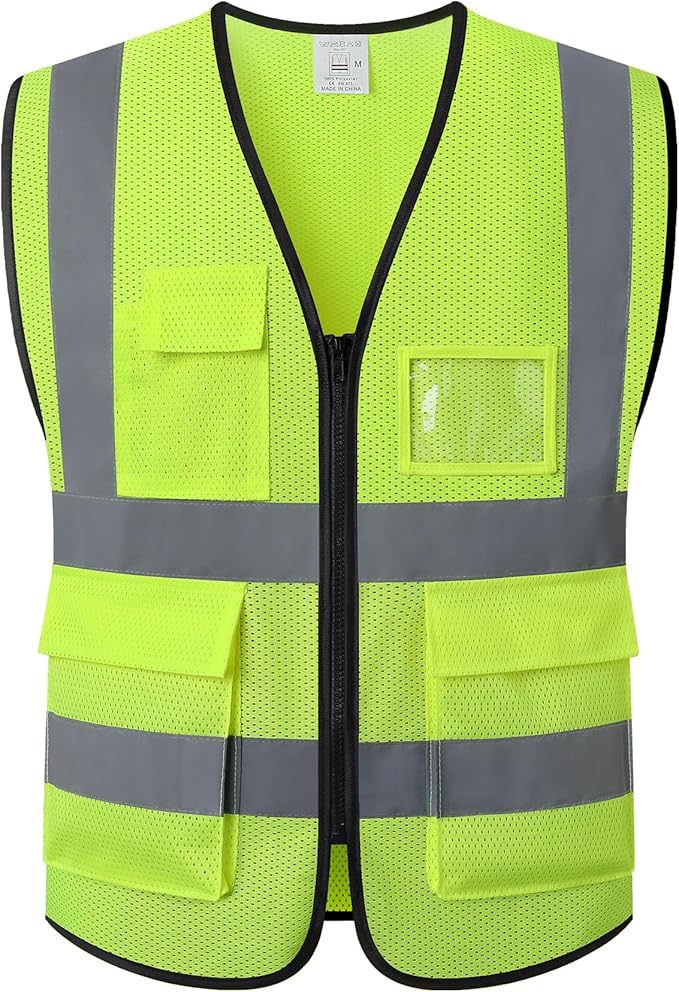 |
| 21" Heavy Duty Rechargeable Traffic Wand with Siren | TrafficSafetyWarehouse.com | 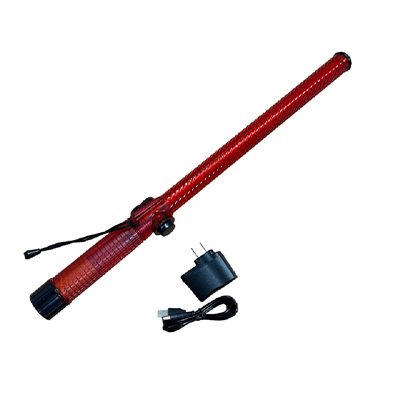 |
| Radios | Retevis RT27 Radio (Amazon) | 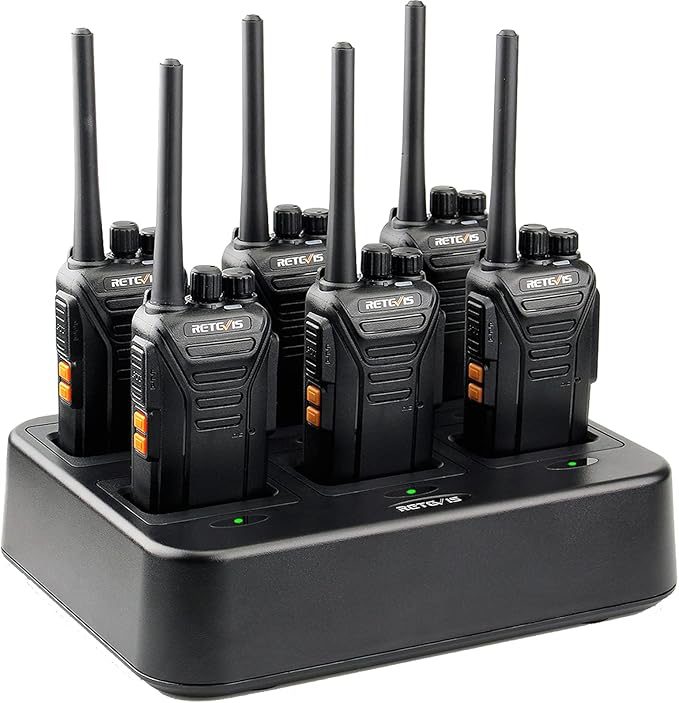 |
| Whistle | Whistle (Amazon) | 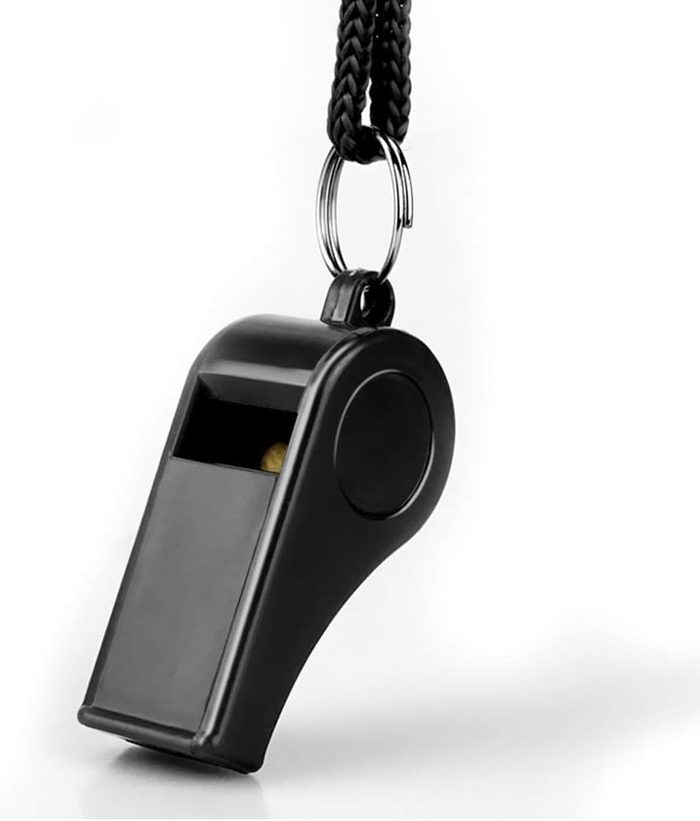 |
Procedures
Pre-Shift Setup & Readiness
1.1 The Safety Coordinator must report to the assigned traffic control position prior to the start of customer pickup hours. It is critical that this resource is in place at opening to ensure smooth lot operations from the first customer to the last–no exceptions.
1.2 Conduct a quick lot inspection to ensure:
- Entry and exit driving lanes are clearly defined and unobstructed
- Cones, barriers, and signage are properly placed and visible
- Pedestrian walkways are identified and clear
- No safety hazards are present (debris, blocked driving lanes, etc.)
1.3 Confirm understanding of:
- Current-day pickup volume and expected peak times
- Any adjusted traffic patterns or temporary changes
1.4 Ensure proper PPE and visibility:
- A high-visibility vest must be worn at all times
- Position must allow clear visibility to incoming traffic
Positioning, Presence, and Escape
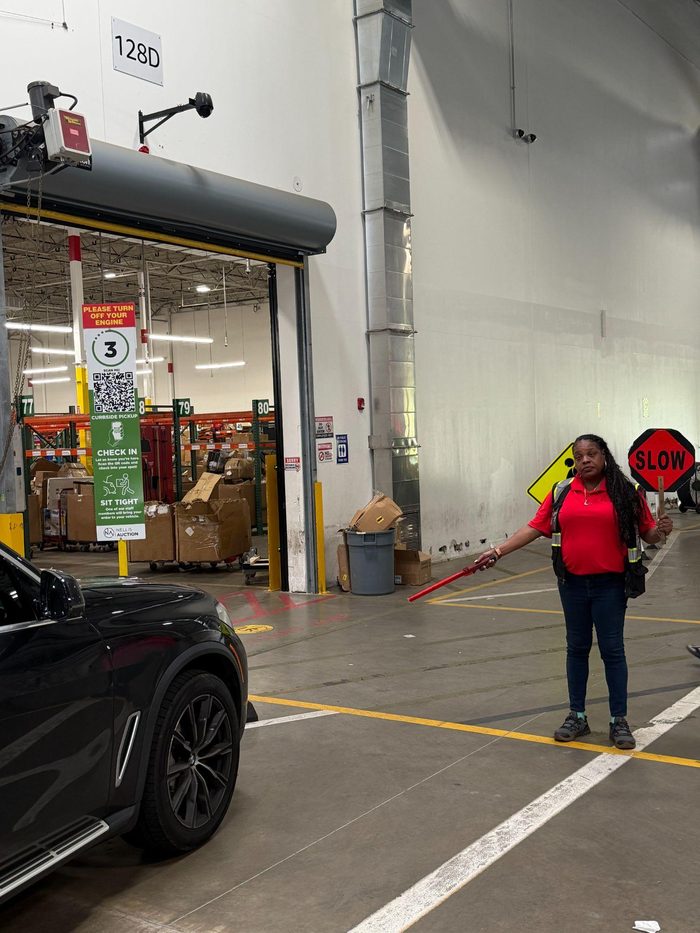
2.1 Safety Coordinators must be physically positioned at the lot entrance & major intersections and operate using a Tethered Anchor model. Coordinators establish their primary command presence at a designated, stationary safety island (utilizing curbs, light poles, or bollards as physical protective barriers).
2.2 Maintain:
- Facing traffic to maximize personal visibility while maintaining a clear, unobstructed line of sight to all incoming vehicles.
- Controlled parallel movements strictly along the perimeter or edge of the driving lane to clear lines of sight, manage pedestrian paths, or proactively hold cross-traffic.
- A professional, courteous, but authoritative demeanor.
- A clear, pre-planned escape route at all times; never get boxed in between parked vehicles.
2.3 Do Not:
- Leave the entrance or parking lot unattended during active pickup hours without summoning a backfill.
- Step directly into active driving lanes, enter intersections on foot, or walk into a vehicle's path of travel to micro-manage or escort a single driver's movement.
Customer Arrival & Initial Contact
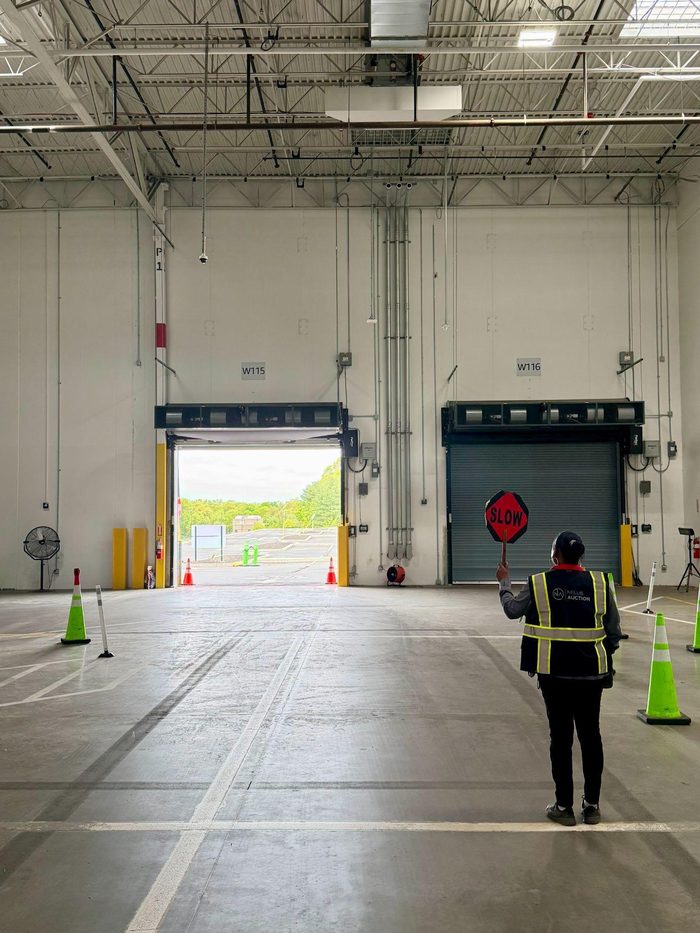
3.1 As each vehicle enters:
- Make immediate visual contact with the driver
- Use standard, clear hand signals to slow or stop the vehicle if needed
3.2 Direct the customer in a professional, courteous and concise manner, always leading with confidence & conviction.:
- Provide simple, direct instructions (avoid over-explaining)
- Be intentional with body movements and guidance
3.3 Control entry flow:
- Allow vehicles to enter only when there is safe capacity in the lot
- Temporarily hold vehicles at the entrance if congestion or a safety risk exists
Traffic Flow Management
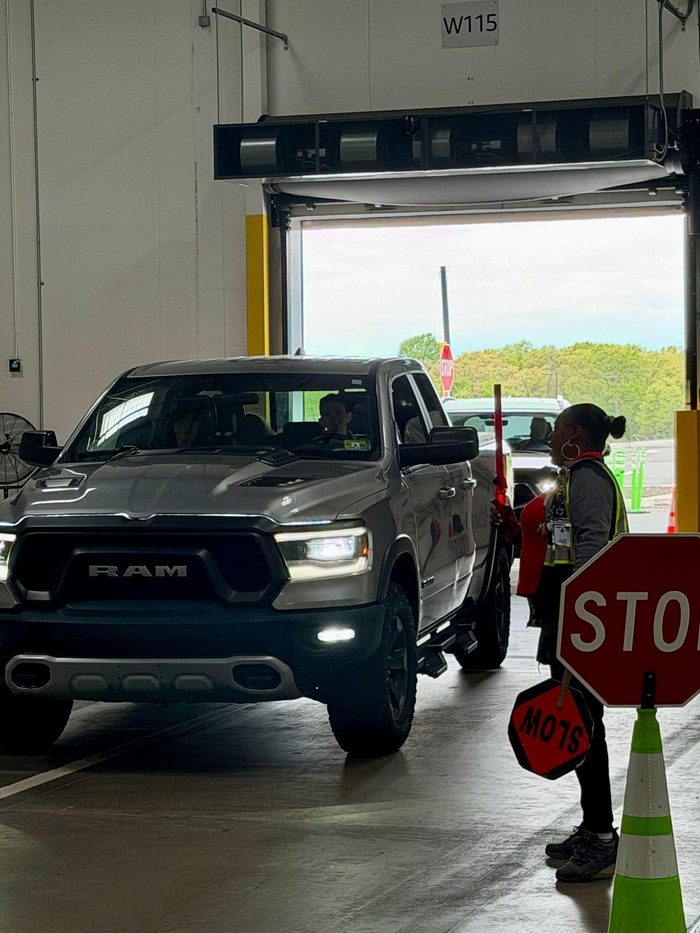
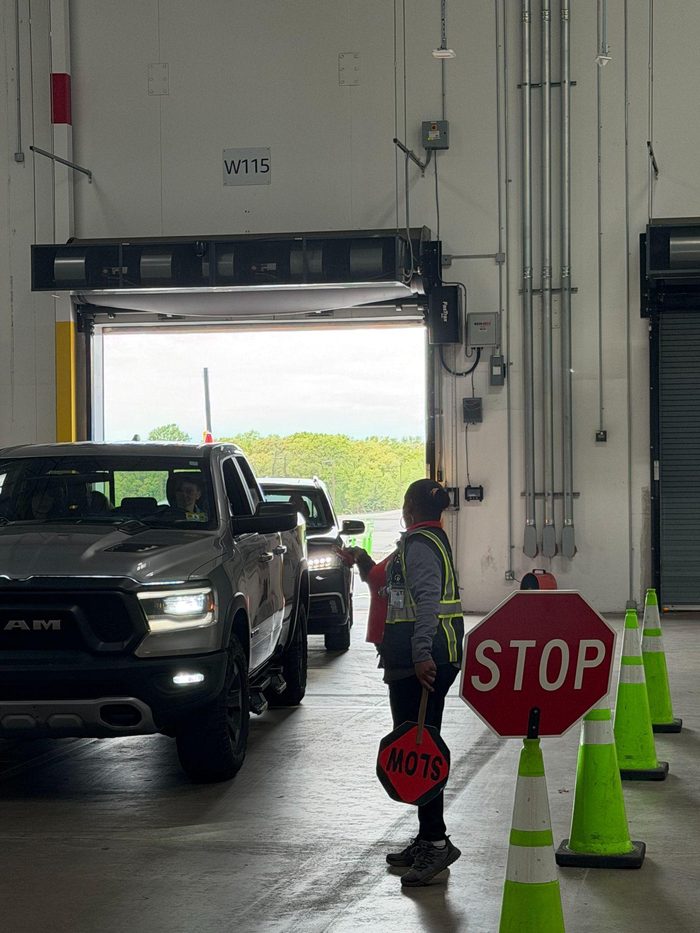
4.1 Continuously manage the flow of vehicles by:
- Directing cars into the correct driving lanes
- Preventing counterflow or wrong-way driving
- Maintaining separation between moving vehicles and pedestrians
4.2 Use standardized hand signals and body positioning:
- Point clearly in the direction of travel
- Use stop signals decisively when needed (Arm extended horizontally, hand facing up, palm open and facing the driver)
- Never assume a driver understands—always confirm visually
4.3 Maintain steady movement:
- Avoid allowing vehicles to idle unnecessarily in active spaces
- Keep entry, staging, and parking areas moving consistently

Parking Direction & Space Assignment
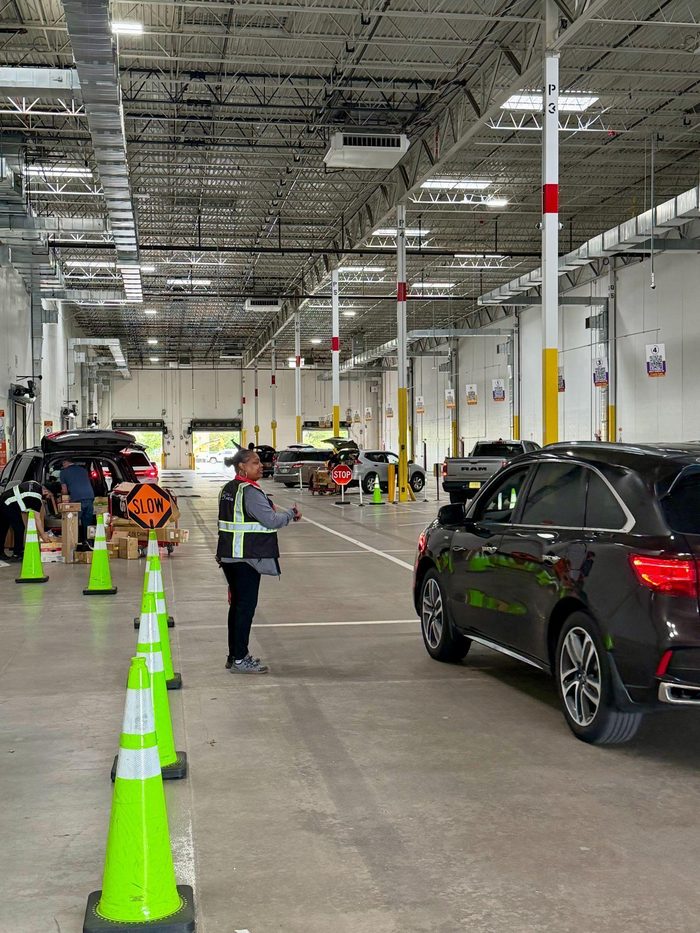
5.1 Direct customers to the next available or designated pickup space. Do not allow customers to self-select parking, and prioritize spaces closest to the load-out door to encourage faster cycle times.
5.2 Guide vehicles into spaces safely from a secure distance:
- Coordinators do not micro-manage or walk behind single vehicles exiting or entering regular parking spots.
- If a severe blind spot or tight squeeze requires intervention, the coordinator may step parallel to the lane to a secure side-angle (B-Pillar position) to assist, then immediately reset to their stationary anchor point once the hazard clears.
- Ensure adequate spacing between vehicles
5.3 Confirm the vehicle is fully stopped and safely parked before disengaging.
Pedestrian & Employee Safety Control
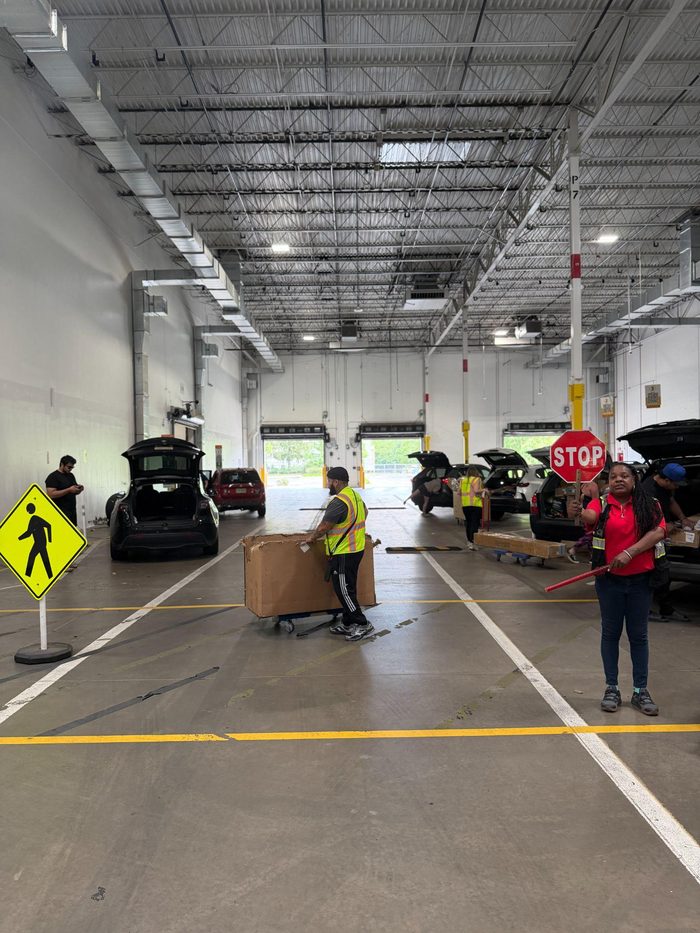
6.1 Maintain constant awareness of:
- Employees loading orders
- Customers exiting vehicles
- Pedestrian walk paths
6.2 Actively intervene when risk is observed:
- Stop incoming traffic when pedestrians are crossing
- Prevent vehicles from moving while loading is in progress
6.3 Ensure:
- No vehicles move through active loading zones unsafely
- Pedestrian paths remain clear and respected
Congestion & Overflow Management
7.1 When the lot reaches capacity:
- Temporarily stop or meter incoming vehicles at the entrance
7.2 Communicate clearly to waiting customers:
- Use hand signals and simple verbal directions
- Maintain order, no uncontrolled queueing or blocking roadways
7.3 Coordinate with additional staff (if available) to:
- Relieve congestion points
- Open additional driving lanes or spaces if safe
Continuous Monitoring & Adjustment
8.1 Continuously scan the environment:
- Entry point
- Active driving lanes
- Parking spaces
- Pedestrian areas
8.2 Adjust positioning as needed to maintain control:
- Reposition to improve visibility
8.3 Communicate with team members:
- Call out hazards
- Coordinate traffic pauses during peak pickup times
8.4 Cone Management
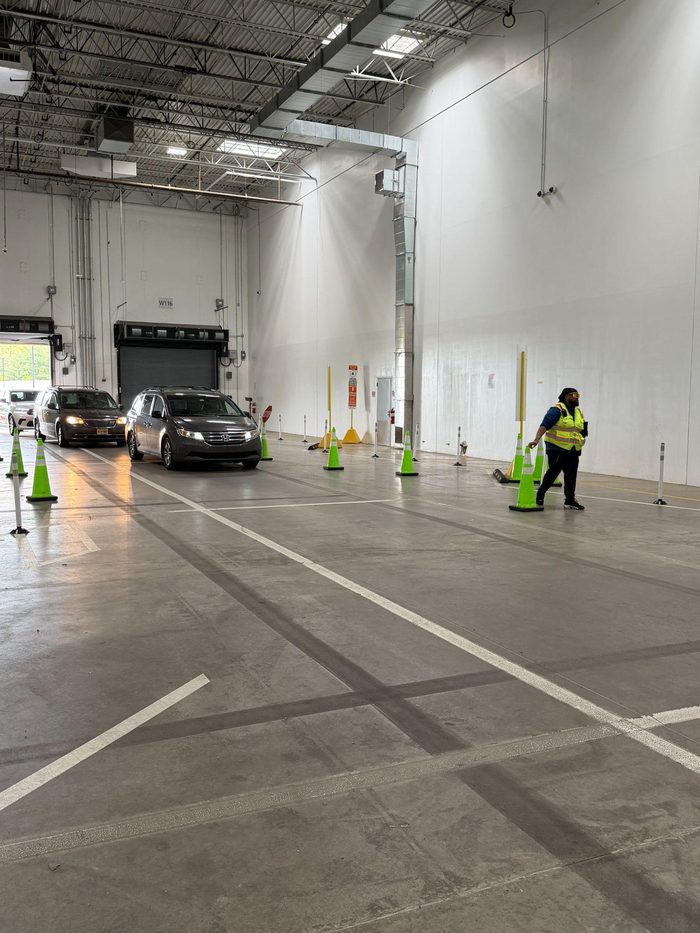
- During slower periods, place traffic cones in spaces that are furthest from the load out door to discourage customers from parking far away
- Remove cones as needed during busier hours; NEVER leave spaces coned off when there is a line of customers waiting. The moment a queue forms, remove cones to free up additional spaces. Close said spaces only once the line dies down and multiple spaces become idly free.
End-of-Shift Responsibilities
9.1 Do not abandon post until relief arrives or pickup operations have ended.
9.2 Ensure:
- No remaining unsafe traffic conditions
- The lot is stable and all vehicles have exited the lot
9.3 Reset equipment (if required):
- Signage, cones and barriers returned to designated areas
- Report any damaged or missing safety equipment
9.4 Report to leadership:
- Any incidents, near misses, or safety concerns
- Observed process breakdowns or improvement opportunities
Conflict Management and Documentation
10.1 If a driver becomes aggressive or non-compliant:
- Safety is the priority over enforcement. If a driver is aggressive, practice Disengage over Defend - let them pass. Do not block their path with your body or chase them.
- Complete the formal Safety Hub report by the end of your shift for any “Yellow” or “Red” level incident. When collecting information, stand at the B-Pillar (behind the driver’s window).
- Capture License Plate #, State of License Plate, Vehicle Make and Color, Driver Description, Time of Incident, and Witness Names and Contact Details.
11.1 The use of standardized radio protocols is essential for facilitating clear understanding and prompt response, follow these practices during transmissions:
- Press the button, wait 1 second, then speak to prevent clipping. Use the “Hey You, It’s Me” format to identify yourself and close every message with “Copy” or “Roger” or “Wilco” (Will Comply).
- Utilize a single channel for lot activity communication (Safety Net) is dedicated to traffic flow and safety alerts only.
- Use discreet code words to communicate concerns to management and other safety coordinators:
- Yellow Level: Aggressive/Non-Compliant Driver. Action: A nearby employee moves to be a witness.
- Red Level: Immediate Threat / Physical Danger. Action: The manager calls 911.
- Signal 100: Need a Manager (sensitive information). Action: Manager goes to the Safety Coordinator for a private talk.
- Clear the Net: Emergency in progress. Action: All non-essential radio traffic stops immediately.
- Always use the standardized phonetic alphabet when communicating with others to avoid miscommunication.

Process Flow Diagram
The following diagram provides a visual overview of the end-to-end process flow. Refer to the Procedures section for detailed step-by-step instructions.
The Nellis Standard
The following standards are extracted from this SOP and represent the key observable, auditable behaviors and outcomes that define excellence in this process. These standards feed into the Nellis Auction master audit framework.
The Safety Coordinator is the first face customers see and the reason the lot stays safe. Customers appreciate order, and we deliver it with calm, confident authority—always from a position of safety—ensuring every arrival is orderly and pleasant.
The Safety Coordinator maintains a stationary anchor position behind or near physical infrastructure, utilizing limited parallel tracking along the lane edge only when high volume demands.
Radio communications strictly adhere to the Push-to-Talk (PTT) Rule (1-second pause) and the International Phonetic Alphabet. Excessive, informal chatter is prohibited.
All non-compliance and aggressive driver incidents are observed from a safe distance, disengaged from immediately, and logged via The Safety Hub by the end of the shift.
Safety Coordinators use crisp, standardized hand signals, whistles, and STOP/SLOW paddles from their post to decisively manage traffic flow and create a safe loading environment.
Safety Coordinators wear all required PPE and leverage standard-issue equipment at all times (Orange Safety Vest, Day/Night Wands, Whistle, Radio).
Safety Coordinators place traffic cones in parking spaces furthest from the load-out door to optimize cycle times, removing them dynamically to manage queues. Cones are never left blocking spaces when vehicles are actively queued.
Safety Coordinators remain visible and present in the lot at all times during active load-out hours and must secure an official operational backfill prior to taking breaks.
Safety Coordinators maintain a friendly demeanor at all times, even when drivers do not follow direction or guidance. Default to internal escalation when necessary and avoid employee-customer altercations.
Common Exceptions
| Exception / Scenario | Resolution | Reference Document |
|---|---|---|
| Address non-compliant drivers immediately | Provide clear, firm direction Do not allow unsafe behavior to continue |
|
| Handle confused or lost customers | Redirect without disrupting traffic flow Keep instructions brief and actionable |
|
| Escalate when necessary | Aggressive behavior Repeated non-compliance Any situation that presents a safety risk |
Supporting Job Aids & Forms
| Document Name | Description | Link / Location |
|---|---|---|
| Safety Coordinator Training | Flagging motions, communication, expectations | Parking Lot Safety Guidance |
| Phonetic Alphabet | Standard radio communication guidance | Phonetic Alphabet |
| Nellis Auction Safety Manual | Provides supporting policy and procedures on topic | TBD |
Training & Certification
| Training Requirement | Audience | Frequency | Delivered By |
|---|---|---|---|
| [Initial Onboarding Training] | [New Hires] | [Day 1] | [Certified Trainer] |
Certification Requirements
Quality Control & Auditing
Audit Schedule
| Audit Type | Frequency | Performed By | Documentation |
|---|---|---|---|
| [Spot Check] | [Daily] | [Area Manager] | [Audit Log / Form] |
| [Formal Audit] | [Monthly] | [Ops Manager] | [Audit Report Template] |
Non-Conformance Handling
All deviations from this SOP will be addressed using a progressive accountability process to ensure compliance and continuous improvement.
Process Steps:
- Journal Acknowledgement
- Initial documentation of the issue.
- Team members acknowledge the expectation and correct process.
- Coaching 1
- First formal coaching conversation.
- Focus on reinforcing correct procedures and expectations.
- Coaching 2
- Second coaching session if behavior continues.
- Additional guidance and clarification provided.
- Corrective Action 1
- Formal corrective action issued.
- Documented performance concern with clear expectations for improvement.
- Corrective Action 2
- Escalated corrective action for repeated non-compliance.
- Corrective Action 3
- Final level of corrective action.
- May result in further disciplinary action up to and including termination.
Expectation:
All team members are expected to follow SOP procedures at all times. Failure to comply will result in progression through the steps outlined above.
Safety & Compliance
Safety Requirements
This section outlines the process for traffic coordination and customer guidance during order pickups, focusing on the safe execution of all traffic control tasks. Key activities include directing and controlling incoming vehicle flow to ensure orderly movement, maintaining constant visibility and awareness of all vehicle and pedestrian movement in the lot, managing positioning from a safe offset location with a clear escape route, using standardized hand signals and radio protocols for clear communication, and adhering to the "Look, See, and Be Seen" protocol across all activities to prevent injury.
Weather Safety:
- Maintain hydration levels continuously while on duty.
- Dress in a manner suitable for the existing environment, including extreme temperatures and sun.
- Apply sun protection regularly to avoid burning.
- Utilize ponchos or coats designed for rain when precipitation occurs.
- Use umbrellas as required to shield against sun or rain.
Visibility & Traffic Safety:
- All employees must wear ANSI Class 2 or 3 safety vests.
- 360° Sweep: Perform a head-turn sweep before stepping into a driving lane.
- Never assume a driver sees you.
- Do not cross a vehicle’s path until direct eye contact is made with the driver.
- Maintain awareness of moving vehicles at all times.
- Ensure clear communication with drivers when directing traffic.
Recommended Personal Gear:
- Water bottle
- Lip balm
- Sunscreen
- Sunglasses
- Insect Repellant
- Band Aids
- Rain Gear
- Spare Socks and Gloves
- Pen and Notebook
Traffic Signaling Methods and Devices:
- Traffic Control Wands (daylight)
- Lighted Traffic Control Wands (nighttime/poor visibility)
- Stop/Slow Paddle
- Hand Signals
- Whistles
- Radios
Pre-Shift Equipment Readiness Check:
- Check that the traffic control wands are clean and undamaged.
- Verify the batteries are in good condition and the flashing light is functioning correctly.
- Inspect the wands for physical damage.
- Confirm that the whistle is functioning correctly.
Incident Reporting
All safety incidents, near-misses, and hazardous conditions must be reported immediately to ensure a safe work environment and proper documentation.
What to Report:
- Work-related injuries and illnesses
- Near-misses (events that could have caused injury or damage)
- Unsafe conditions (equipment issues, hazards, weather-related risks)
- Vehicle-related incidents in the parking lot
Reporting Process:
- Notify a Manager Immediately
- Report the incident to the Area Manager or supervisor as soon as it occurs.
- Do not delay reporting, even for minor incidents.
- Ensure Safety First
- Stop work if necessary.
- Move to a safe location.
- Assist any injured individual if it is safe to do so.
- Seek Medical Attention (if needed)
- For injuries, request first aid or medical assistance by contacting the Nurse Hotline.
- Call emergency services (911) for serious situations.
- Document the Incident
- Complete The Safety Hub report form with accurate details.
- Include time, location, individuals involved, and a detailed description of what occurred.
- Manager Documentation & Escalation
- The Manager will log the incident according to company policy.
- Injuries/Illnesses: Management to complete Slack notification for awareness. If the incident results in a medical visit, complete the Injury and Illness Incident Report (IIIR).
- Escalate to upper management, EHS or HR, if required.
- Follow-Up
- Follow all corrective actions or safety recommendations provided.
- Utilize the Incident Investigation Form to conduct a thorough investigation if requested.
Expectation:
Non-compliance with incident or hazard reporting protocols may lead to formal disciplinary measures. Timely notification is essential to mitigate operational risks and maintain a secure environment for all personnel.